Liu, magistrate of Hanyang, was a rigid man, and suppressed a heterodox sect that used zhuyou medicine too severely. Some scoundrels appealed to the governor. The governor admonished him; Liu spoke back bluntly, and the governor said in anger: “If you are really so capable, there is a case at Mianyang. Can you try it?”
Liu said yes.
Now there was a girl at Mianyang named Jin Gui who had been betrothed to a family named Huang. When the wedding day came, the bridal chair was carried to the house, and two brides came out together. Their hairpins, earrings, clothes, voices, bodies and postures were exactly alike, and the family did not dare complete the ceremony, and sent both girls back to Jin. The Jin parents could not tell them apart, and so both families brought suit on the grounds that they could not tell human from demon, and the case went from prefecture to governor and hung for half a year without being decided. That is why the governor set it as a test.
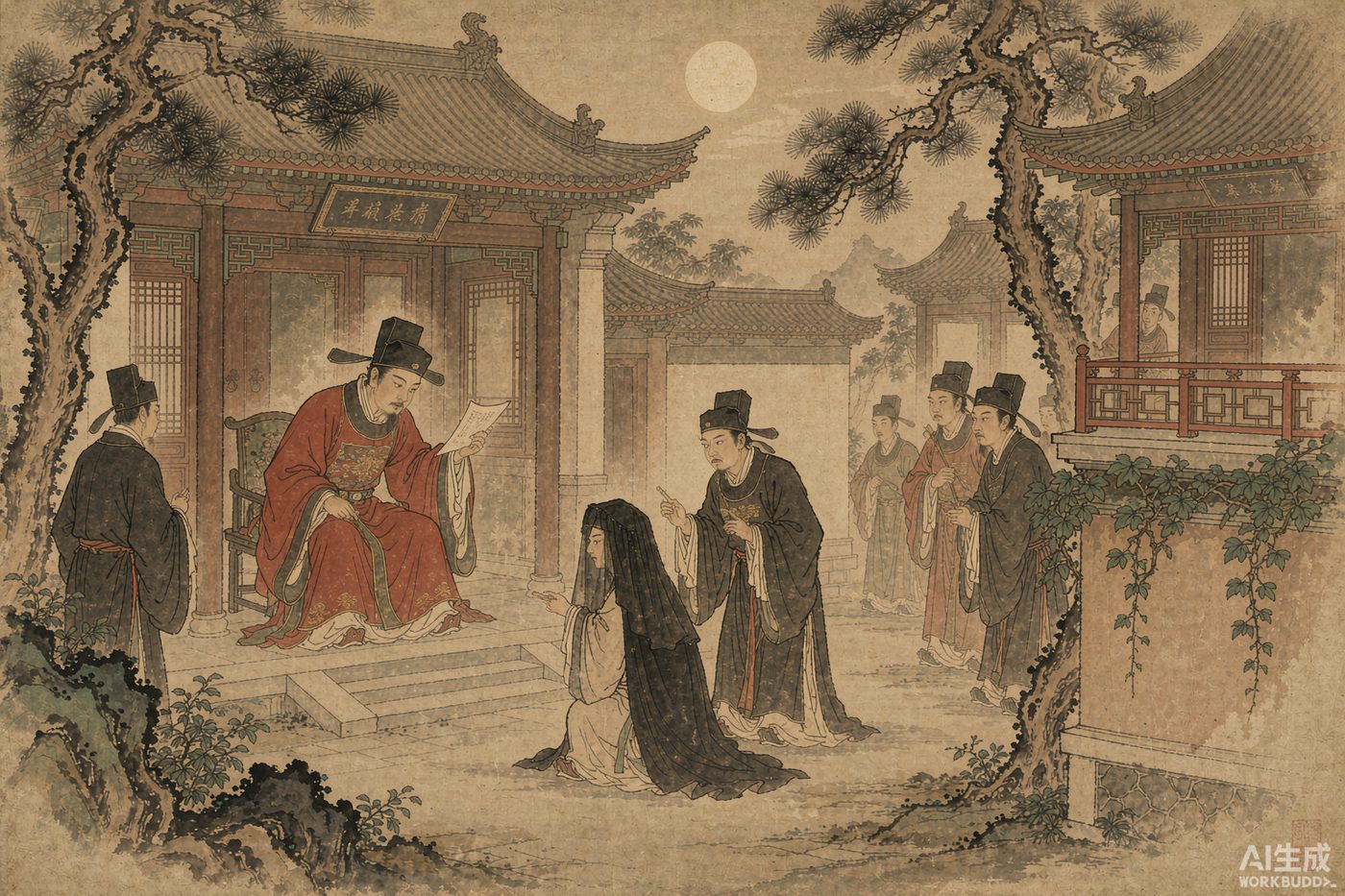
Liu petitioned to have the parties brought to the governor’s office for trial, and asked to borrow the governor’s great seal for the hearing. The governor agreed.
On the day, Liu summoned the two girls and examined them separately in detail — their parents’ birth-data, their property, their furnishings, all of it — and when he compared the depositions, they were identical.
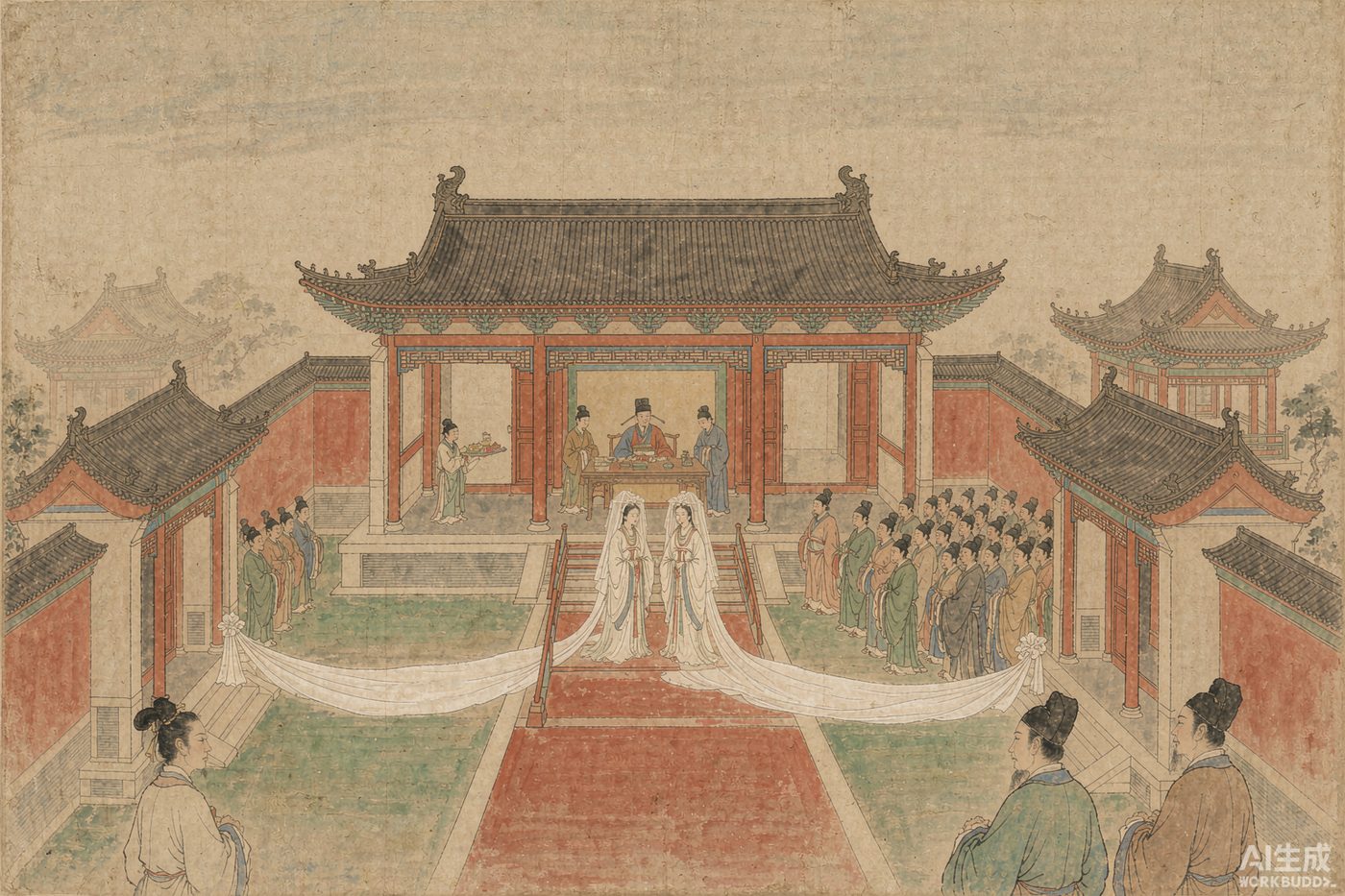
He then called both girls before the bench and said: “Looking at the two of you, you are plainly twin sisters of one womb. If I gave you both to the Huang family, your parents would not consent. So I have laid a magpie bridge here. She who can cross it shall be given to them; she who cannot shall be dismissed.”
He spread white cloth like a bridge, running from the ceremonial gate straight to his own seat, and ordered the two girls to walk on it.
One refused, tears standing in her eyes. The other was openly delighted.
Liu shouted at the weeping one and had her expelled from the office. He called the delighted one onto the cloth. That girl walked it as though on level ground and came to him.
Liu secretly raised the office seal and struck her on the head with it. The others threw a net over her, and she turned out to be a fox, which they threw into the river. So the case was closed.
The governor was delighted and memorialised for Liu’s promotion to prefect of Hanyang, and from then on the whole region sang of the return of Judge Bao.
Now there was a tea merchant at Hanyang who was carrying a large sum home. Robbers pursued him, and he fled to Hanchuan and begged the help of an innkeeper. The innkeeper thought for a long while and said: “If that is how it stands, this is no place for you to stay. Go quickly to a certain military graduate’s house, and you may be safe.” He took him there, and the graduate’s brothers set out wine and food, swept a bed, and said: “If there is any movement in the night, sleep easy and do not lightly go out to look.”
The merchant went to bed. The brothers waited with a candle for the robbers, who duly came. They fought it out, and the graduate killed four of them; the remaining three went over the wall and fled.
At dawn they called the merchant to get up and go and report to the county. Before he had gone far, the prefectural officers had already arrived and carried the graduate’s brothers off in chains — because the wily robber had pretended to be the tea merchant and gone straight to the prefecture at night to beat the drum and cry for help, saying he had been attacked for his money, so Liu sent officers to arrest the graduate’s brothers on the spot and examine them. The brothers gave the whole account and asked to be allowed to release one of them to protect the household. Liu refused, and put them all in prison.
The robbers went back into the graduate’s house and killed his whole family and got away. By the time Liu realised and released them, it was too late.
Ah! He could judge a fox, and yet was not a match for being sold by a robber. Is it not true that governing demons is easy and governing people hard?