Dai Zhishao, courtesy name Caimei, was of Jizhou. As a youth he read a little and made no name, and being too poor to support himself he copied documents for a rich family in the district.
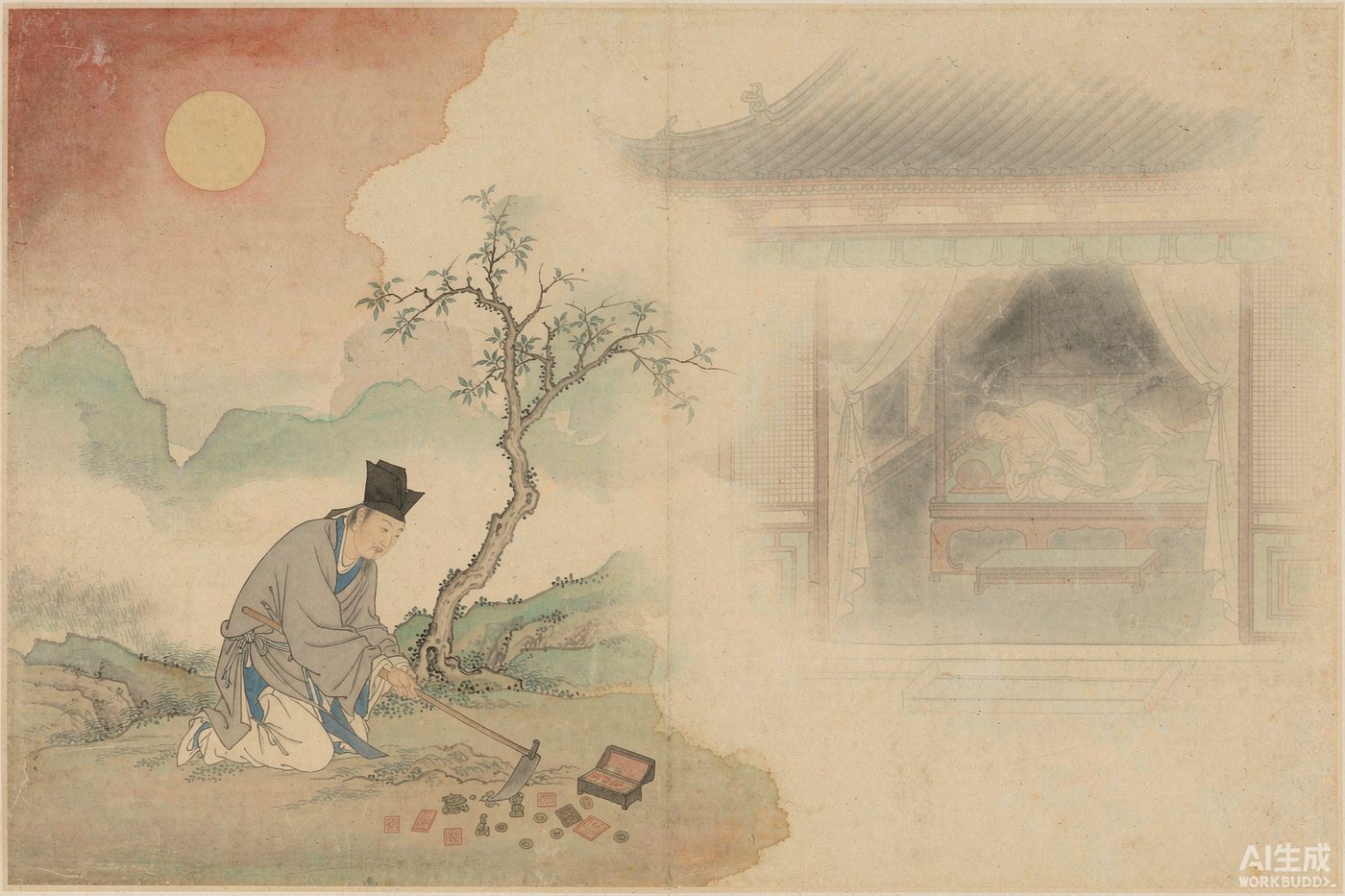
One night he dreamed he took a hoe into their garden, and at one stroke of digging he got a bronze seal, a single knob, two inches square, with seal script like the inscription on a ritual vessel. Looking at it, its characters read: Ri Fang Bo Lian Shuai — five characters. He hung it on his elbow, and at another stroke of the hoe got a board like the lacquered tablets used at the time, with two lines of a poem written on it:
Utterly desolate, the plum opens on the riverbank; I do not know how my foot slipped into the southern pond.
At the third he got nine bronze figures of the Heavenly Honoured, and grabbed them and put them in his bosom. At the fourth he got eight or nine small seals, and gathered them all up and took them home. He saw his family had finished sacrificing to the spirits and was clearing the food, and woke.
In the morning he was rather pleased and carefully wrote it at the end of the master’s account book.
From then on he was stirred to try, but had no way to support himself, and drifted over the rivers and lakes learning to write large characters, and did shopfront signboards for the market. He reached Changsha, where Zhang the Duke of Wei was living, and wanted an interview but had no means. He swept the gate of a servant’s household in hopes of a glimpse. On the Duke’s birthday he came early to the hall and wrote the character for longevity on the ground in red powder, twenty feet across.
The Duke came out and saw it and asked who it was, and the servant answered, Dai the Daoist. The Duke called him forward, rewarded him with cash and wine, and he refused them, saying: “My foolish ambition is for office and rank, and what I hope from the Duke is not this. I only show off a trick to sell myself.” The Duke thought his words fine and sent a letter to the military commanders recommending him.
The commander took him into the ranks, was about to give him a lot of gold, and sent him to scout the frontier posts. When he had gone he did not return on time, and they suspected he had fled, and after several months he came back. The commander asked why he had delayed, and he said: “The other day I took the chance to slip into the central plains and made my way to Luoyang, and personally visited the Yong’an tombs and asked for the verification, and there is an inscription on the stele.” He took it from his sleeve and showed it.
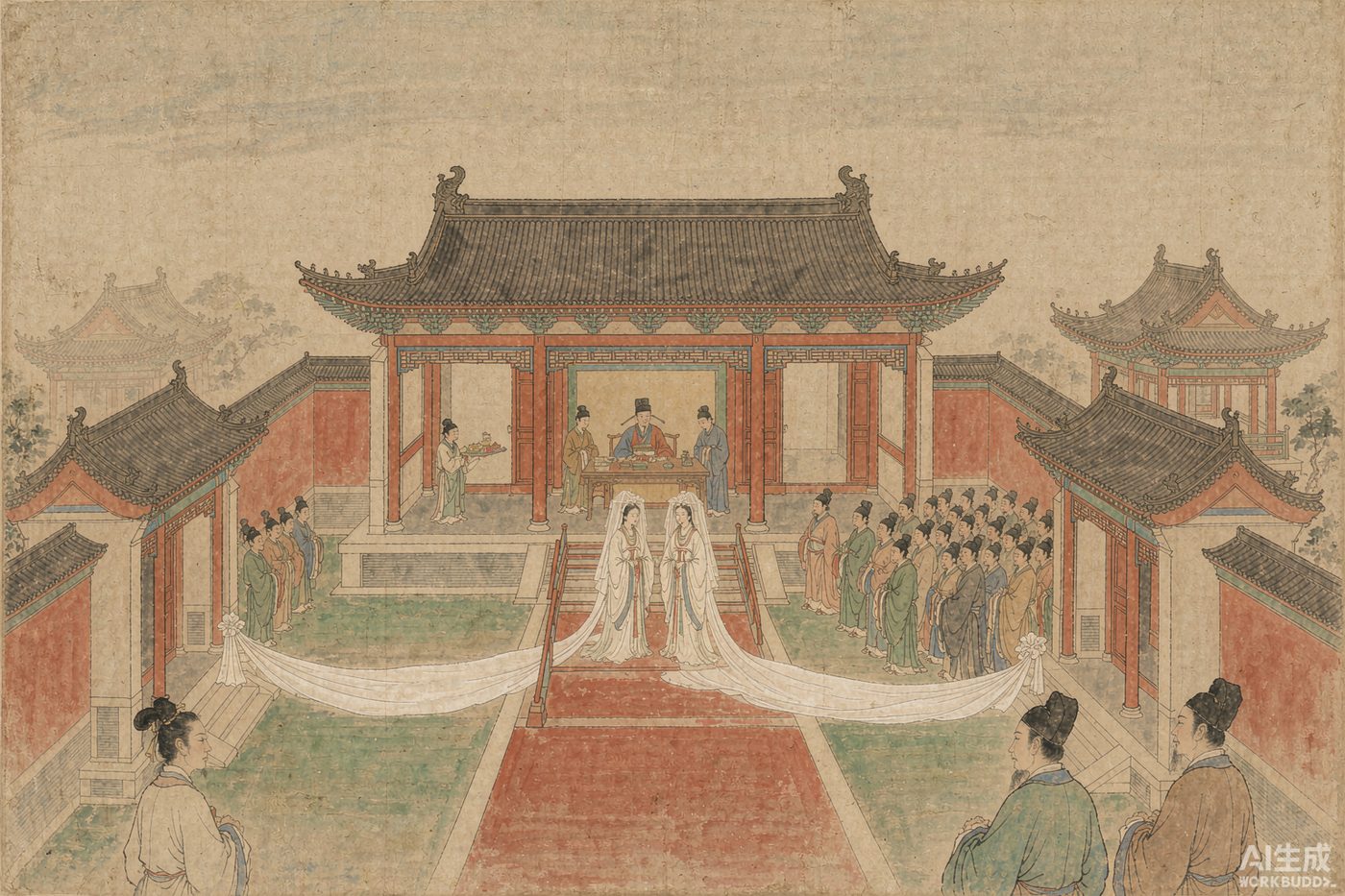
The commander reported it to the court, and not concealing the facts, still recommended him. The Emperor was anxious about the imperial tombs and at once ordered him summoned. Dai set out the whole matter in detail and spoke fluently, and the Emperor was pleased, and an edict appointed him a Bao yi lang. Dai, being originally a scholar, was unwilling to take a military rank, and was transferred to Right Recipient of Edicts.
He then understood that yesterday’s dream’s first seal, the character Ri, was the image of facing the sovereign. The nine Heavenly Honoured were the ancestors. Before long he was promoted to governor of Junzhou and commissioner of the interior, and understood the response of Fang Bo Lian Shuai.
He left office and went home, sought out his former employer, gave him several thousand strings of cash, and begged for the account book he had written, to record himself. Presently he was reappointed prefect of Leizhou, in a place beyond the ranges with a place-name of southern pond, which matched the earlier lines of the poem. Afterwards he passed through the Grand Counsellor of the Treasury and the Ministry of Justice, which was the response of the small seals.
In time those who spoke of it argued that the text of the tombs he had obtained was brought by a northern loyalist who meant to present it, and that Dai had killed him afterwards and taken the credit, and on that account he was dismissed and died.
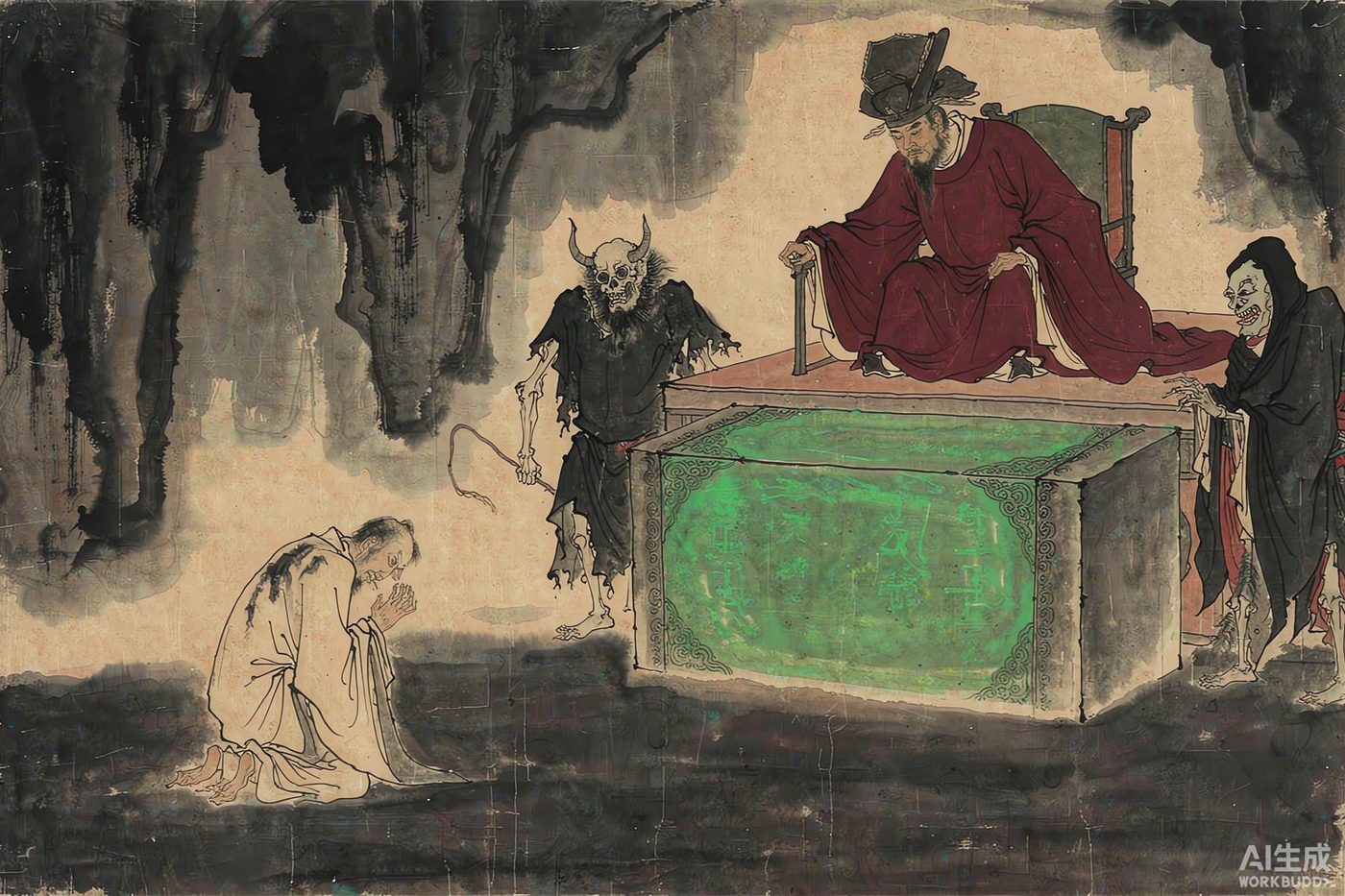
Dai was also a free and chivalrous man. Some say the man he killed was a monk; within a year they saw him as a vengeful spirit, but the full story was never known.