Chen Daoguang, whose courtesy name was Bujin, was a man of Nancheng.
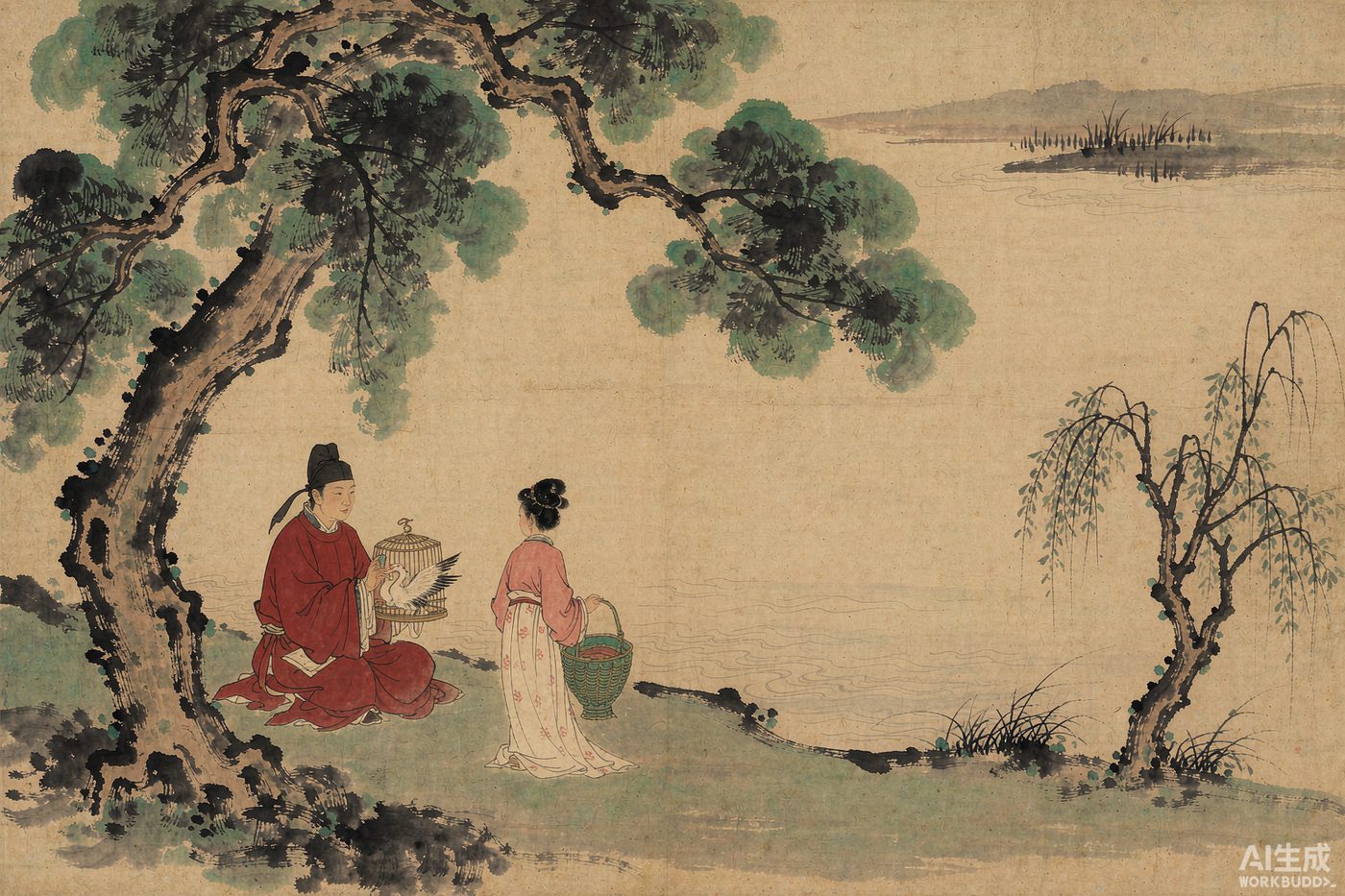
Coming home from his post at Guilin and crossing Dongting lake, he dreamed of a boy in coloured silk who said he was a dragon’s son from within the cave, and had been commanded to tell him: eat no garlic, no leek and no dog — for in three years you will have an encounter.
When the time came, in the sixth month, the staff of the governor of Hezhong sent him on business to Shangzhou. The road took him through Lantian, and he lodged at the Blue Bridge post station. And he dreamed of the boy he had seen before, who came bearing a tally of office and said: “The immortal is waiting for you.” And the boy led the way.
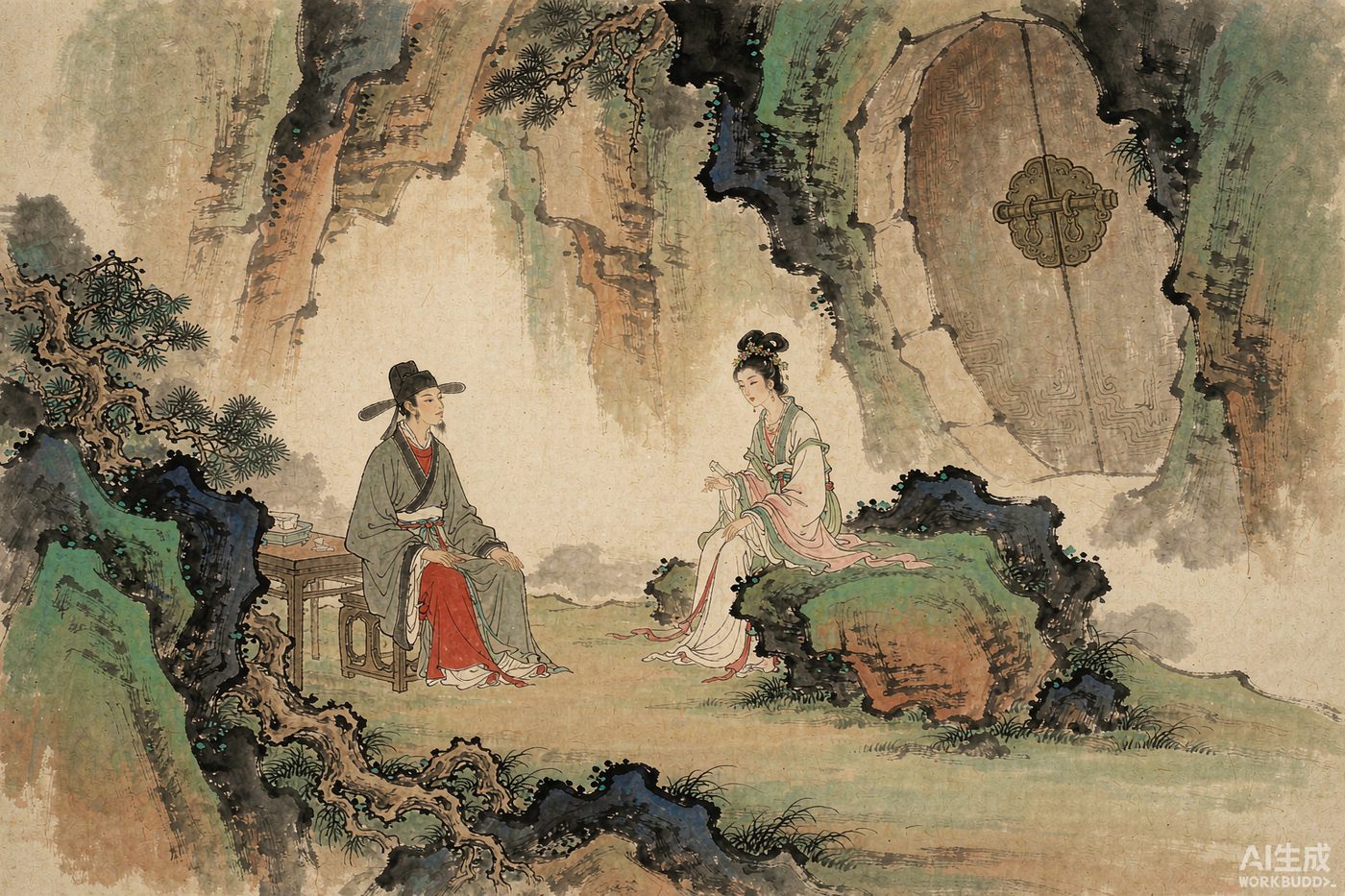
They came to a steep cliff face, and the boy struck the rock with the tally. There was a metallic sound of a lock being drawn, and at once they passed through the cave door. The beams and roofs were bright and new, the gold and jade dazzling, and the fine flowers and trees were things the world has never seen. Going further in, they came to the central hall, where he saw a beautiful woman just come of age, of ethereal bearing, like a being among immortals. She was leaning on a table writing out a Buddhist scripture. She was glad of a visitor, and brought him to sit facing her, and her talk flowed like cloud.
Chen found his moment and teased her. “Does it not oppress you, living here alone?”
She laughed. “The divine are not oppressed by tedium.”
Then she set out wine, and they drank together, ten cups and more, and she led him to sit in her chamber, which was hung with brocade and embroidered silk, and lit with candles as thick as rafters.
“In the world of men,” she said, “it is now the height of the three summer heats. Here there is no summer at all.”
Chen felt only a coolness as of deep autumn.
At her ease she said: “I am the daughter of the True Man Cai, and I dwell in Ji district. My dust-bound karma is not yet exhausted, and so I must meet with a man. My clan is recorded in the Spring and Autumn Annals. My name is Jing, my style Jingniang, and my childhood name was Cixin. As a child I was good at the zither, and my parents changed my name to Zhengniang — the zither girl — because it clashed with the name of a daughter of the Peng family. That I should meet with you is my good fortune. You have the stuff of an immortal in you, but the world’s affairs are all glue and tangle, and will not let you stay here long.”
And she said: “The Controller of Fate does not wish to give you high office, for fear you would fall again.”
Then she brought out a white jade tablet and offered it to him. “Now that you have travelled outside the world of things,” she said, “you must leave a record.”
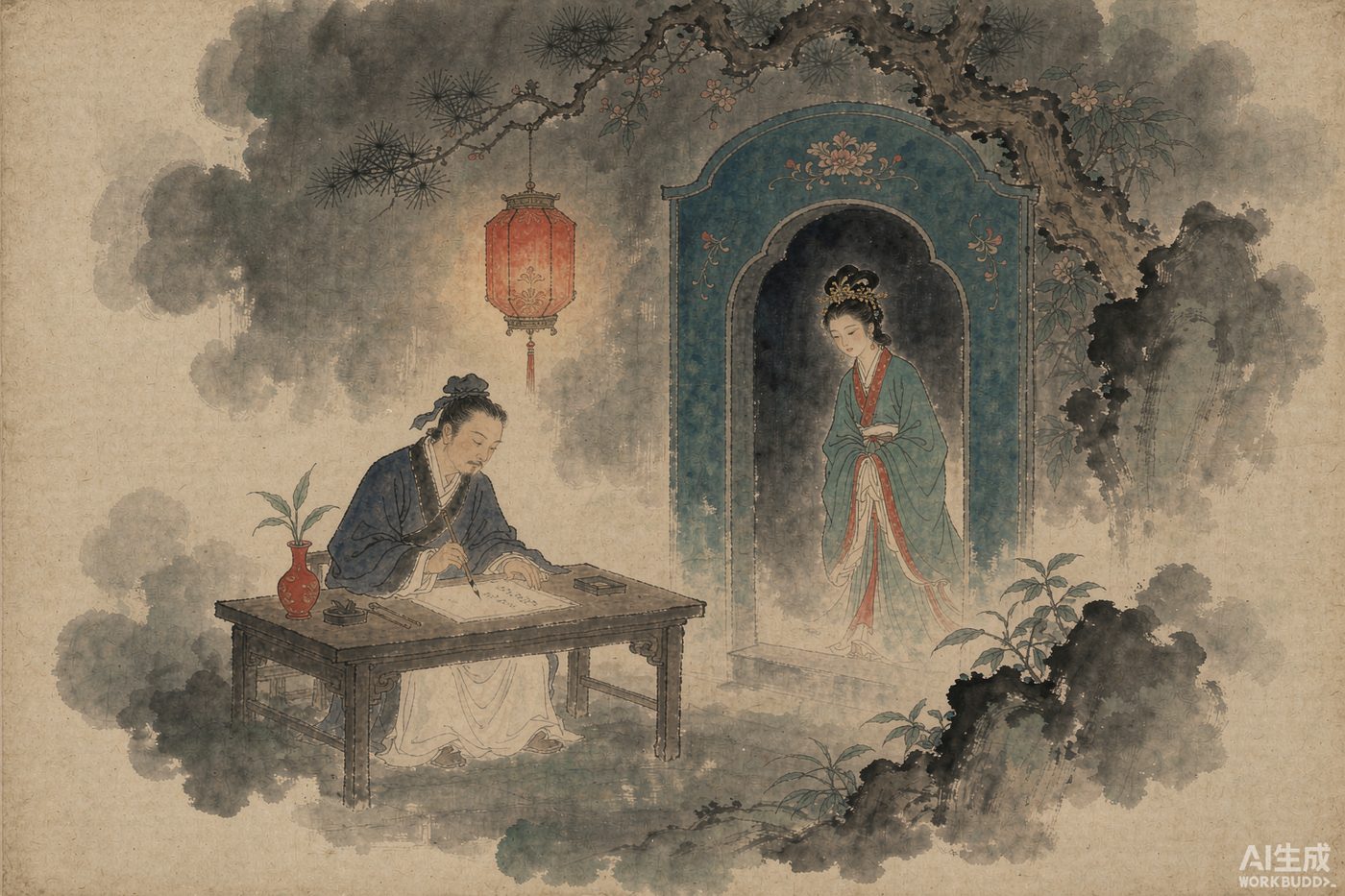
Chen took up the brush and finished ten quatrains on the spot. The first of them runs:
A jade-faced boy in blue came back into the cave;
the immortal in the cave sent a letter to press me:
*the letter asks why I trouble myself so much
why not mount the phoenix and come here soon?
When he had finished he chanted them over, and she bade her maid accompany them on the flute, playing the tune of the Parting Phoenix. The tune ended — and he woke, with the flute still in his ears.
Two nights later the boy came again in dream, carrying the poem tablet.
“The immortal greets you,” he said. “The Jade Maiden is a heavenly maiden, and the pale moon is the essence of the moon — to compare her to them is quite pointless. Liu Chen, Ruan Zhao and Taizhen are ranked immortals, and they visit her constantly — why do you slander them so bitterly? Laozi is the most honoured of the nine heavens; how can you presume to call him by his common name?”
So I have changed “the Old Long-Ear” to “the Taoist”, “base in immortal rank” to “crudely forward”, and “all of them vulgar” to “none of them true.”
Chen accepted every one of the changes. The boy went, and as he went he said, walking and talking:
“Literati of the human world are frivolous. They are fond of mocking people.”
He turned his head, smiled, and was gone. Chen never met her again.
He wrote the story down himself. The lady drank with him through the whole night, and never once did it come to disorder.
This entry is a condensation. The original, some 830 characters, preserves all ten quatrains and the full list of corrections; Hong Mai closes by remarking that she is not like the immortals of Tang fiction at all — she is truly of the rank of the Jade Consort.