Guo Daren’s clearing of the haunt at Hezhou is recorded in the geng division of this work.
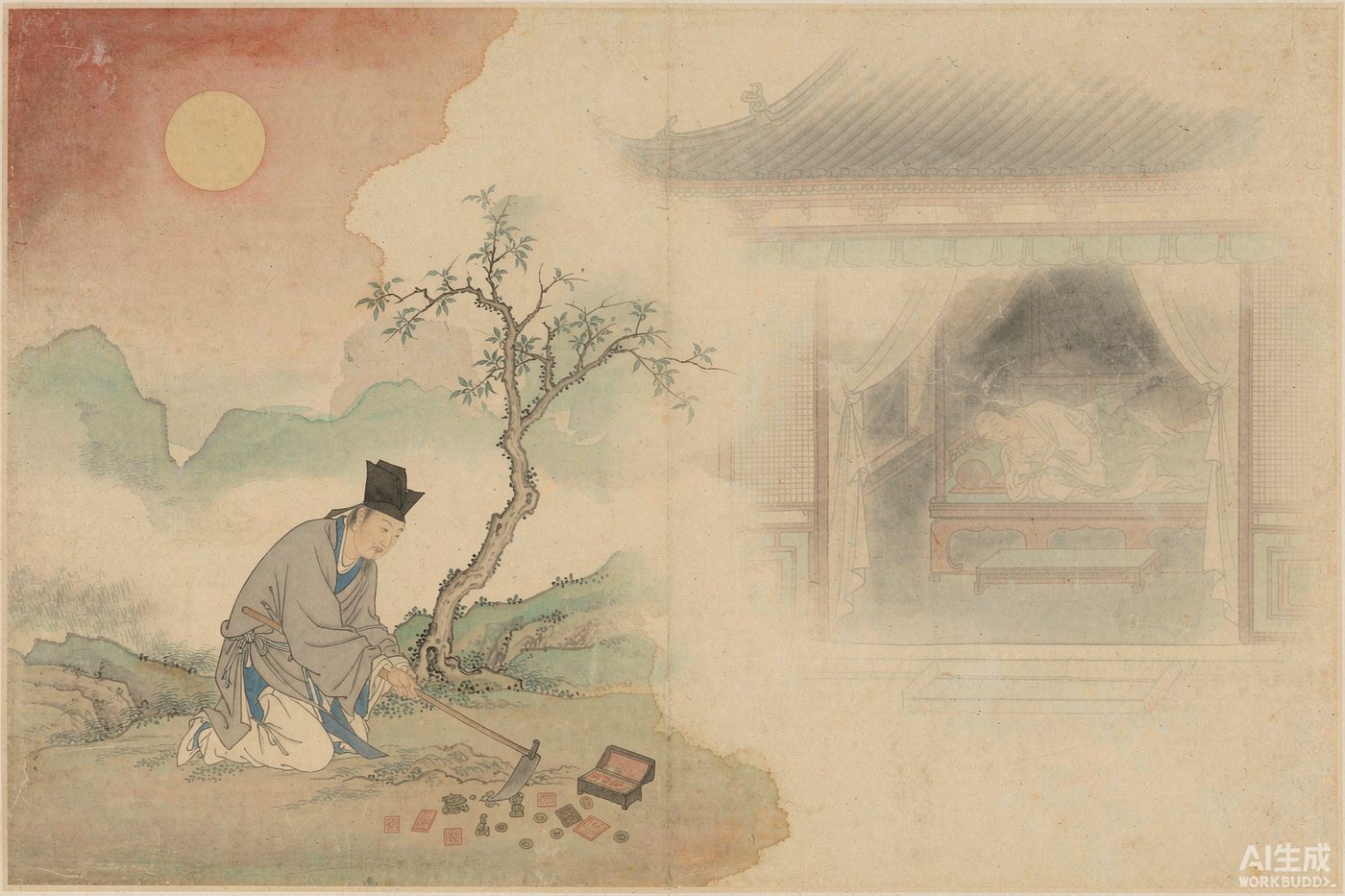
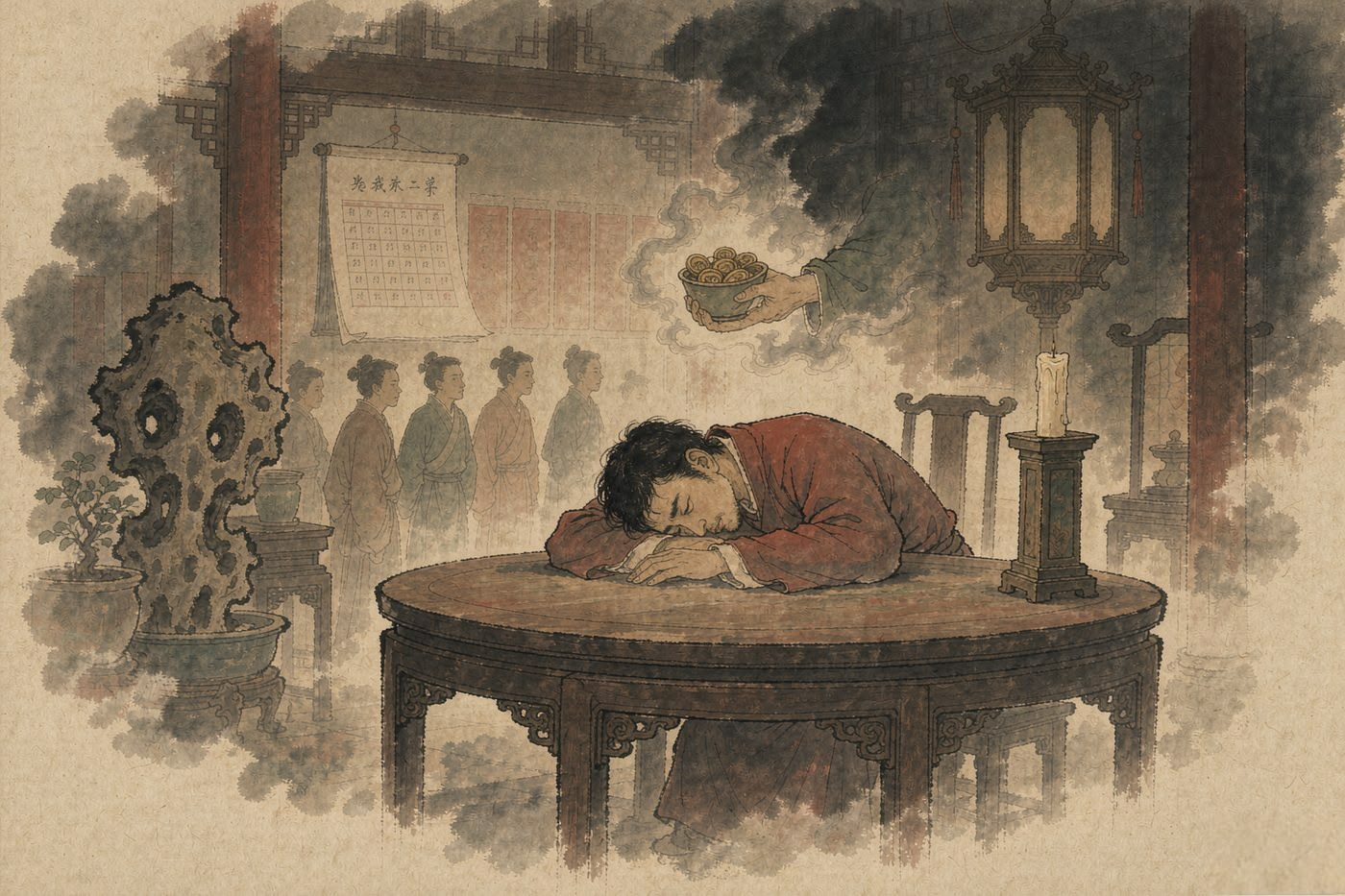
His son, Guo Yun, was living at Pingjiang when he was appointed magistrate of Yuqian in Hangzhou. Before he took up the post he dreamed that he went into his study, and someone handed him several hundred cash and a few pints of rice, saying: “This is the salary and rations of your whole life.”
He woke and was unhappy about it. His portion was so small, he thought, that the rest of his prospects could be reckoned from it. From that time on he never went near the place.
After a while he behaved as though something had come to him. He wrote out a deed of divorce and gave it to his wife, née Yang. She was a daughter of the Prince of He. They had been man and wife a dozen years and had three or four children. She took the paper in both hands and wept, and did not know what to do.
Guo moved out to lodgings and stayed there for months, while relatives and friends vied with one another to talk him into going home. His wife’s elder brother, Yang Yujing of the Privy Council, passed through on his way to his post at Jiangling, came to the house, took the divorce deed and burned it. Guo did go back — but he slept apart from his wife, he would not draw his salary, and when his term of appointment came round he refused to go.
By accumulated years of service from the rank of instructor he was several grades up, and was due to be advanced to daifu. The paperwork reached the Ministry of Personnel, where Zhao Zizhi was the minister. Zhao held on to it and would not send it up: “Since when,” he wrote, “has it been reasonable for a man to lie at home for fifteen years and take no office?” He sent a warrant to Pingjiang to have the man’s existence verified. Chen Gongliang, acting as prefect in his capacity as judicial intendant, pressed him to present himself at court, and only then did he receive his appointment. The ushers at the palace gate were again doubtful because he had no record of salary in recent years, and it took some managing to get him in to be seen. He was posted as magistrate of Jiande in Yanzhou.
It was the fourth year of the Shaoxi era. Although he was now in office, his spirits were always elsewhere. On the eighteenth day of the fourth month, in the middle of the night, he suddenly called to his son: “My wits are in a very bad way. I am afraid something is coming.”
His son asked him in alarm what he meant, but his voice sank lower and lower and could hardly be made out. Six days later he did not rise.
The twenty-fifth was the day his allowance fell due. He died the evening before it. He was fifty-three years old.