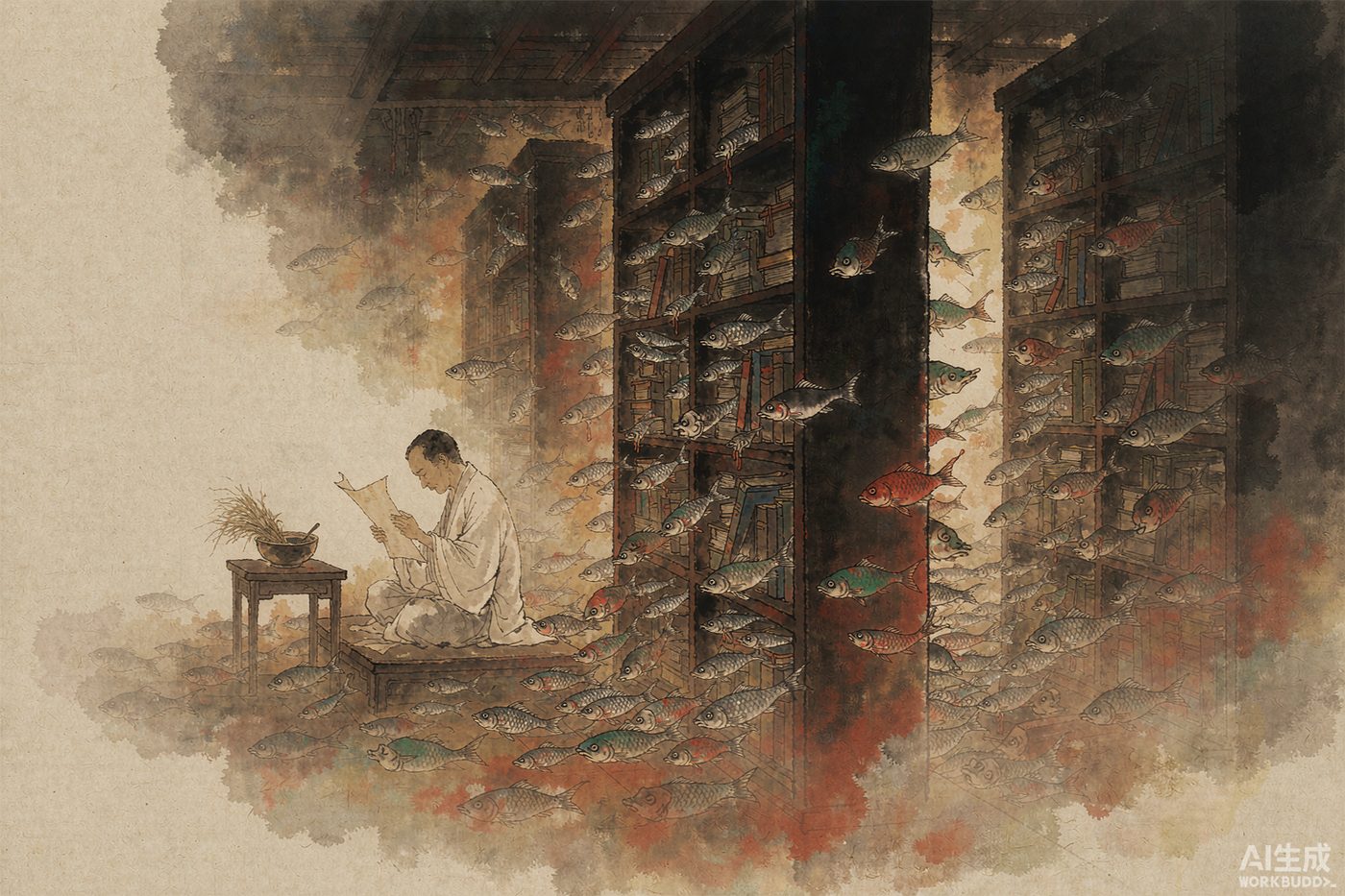
The Tower of Ten Thousand Scrolls was the library of my cousin-uncle the circuit intendant Jiang. He held office in Fujian, and the tower stood shut up over season after season. When he afterwards took leave and came home to his native place, he aired his volumes — and half of them had been ruined by the bookworms.
So he ordered the boys to drag the worms out and catch them, and they killed them all before they stopped. That night the tower sent up ten thousand voices weeping together, and they wept nearly until dawn. The master was troubled by it. I happened to be borrowing a bed in the Pine-Rhyme Studio at the time, and so I wrote a piece to sacrifice to them:
Alas, bookworms!
You bear an insect’s nature but do not gather on what is rank; you get the name of fish but do not leap in the deep. You roam the palace of letters and make your bond with ink. Why do you not learn from the white ants that bore through the mine, or from the green beetle that turns into coin? You say you love the fragrance of books and wish forever to give up the stink of copper.
I have heard that your ancestor, the Maiwang, took wings and rose to immortality. Making poetry and the histories your forge and bellows, you looked to the family trade to fail no more. You dug your lair in books and ploughed the characters as a field; you ate the ancients without digesting them, and one may pity your ambition for that. How came it that the master, being a man of affairs, and with his own luck running against him, spread his net for you like a melon-vine and wiped out your whole clan at once?
The tower of books has been poisoned; the wood of letters has a grievance. Since there is a cause for the disaster you have drawn, let me say plainly what it is. You bored the classics and histories far too deep; you broke the sense apart so that it would not join; you wrecked the chapters and split the lines, dropped the tablets and maimed the volumes. You hid your tiny bodies in the garden of letters and let your greedy spittle run after fish and flesh. You ranked with the vermin of this culture, and so earned guilt before the sages.
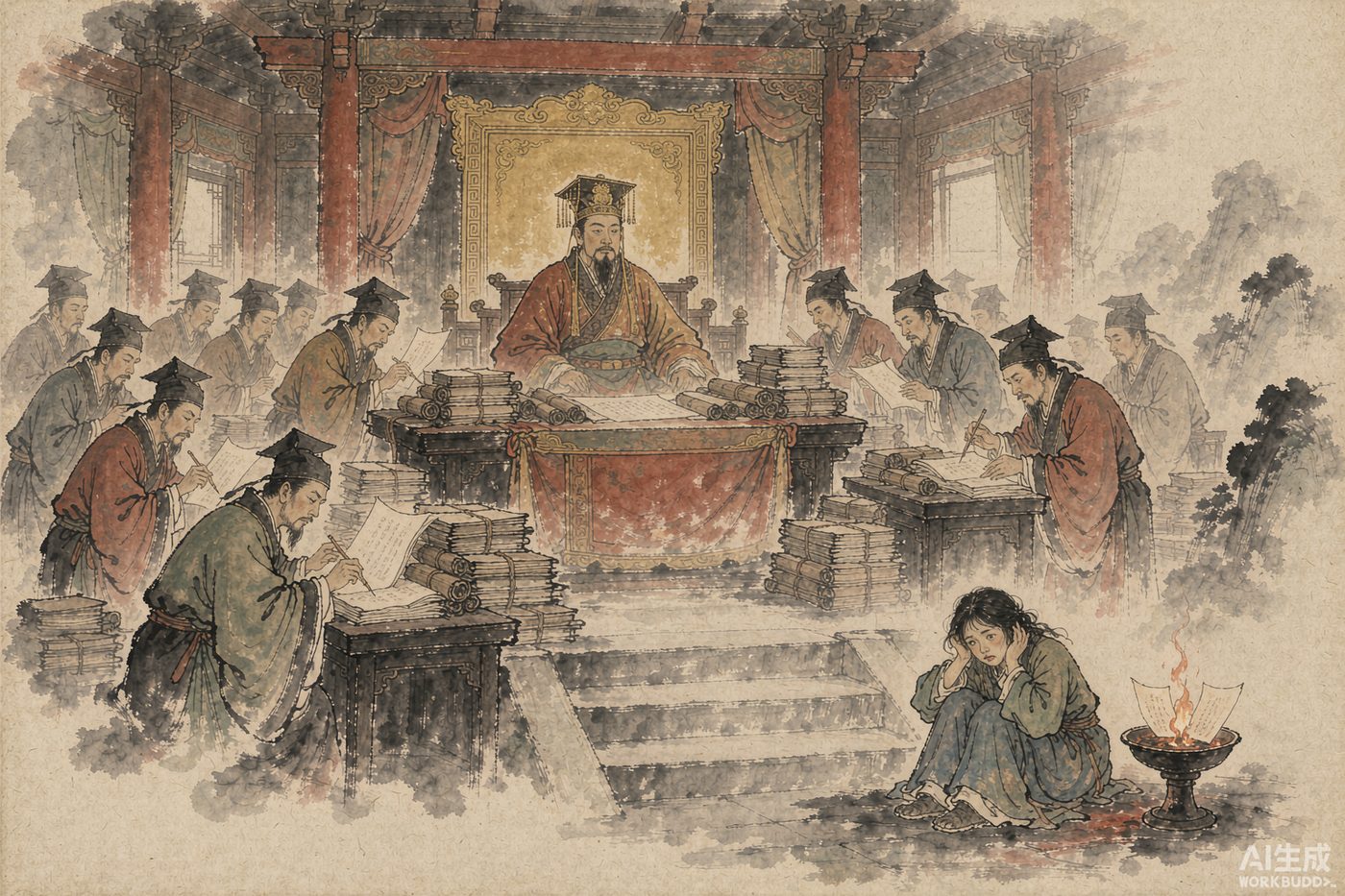
And as for those petty clerks of the knife and brush, who wear out the year over documents — they steal a single character of your life’s work and use it to juggle the text and play with power.
You should repent, and examine your own faults. It was not the master’s love of killing. It was the working of karma from Heaven. A bundle of paper and half a boat of ink — enjoy them here at the funeral table. Do not make trouble on the dragon-and-snake wall; wait to roll your ball at the edge of the dung beetles’ dung. The mound of pens shall mark where you lie; the field of the inkstone shall be your new grave-path. The green flies are summoned as your mourners; the ants are driven out into the nether spring. And if the wandering soul is none the worse, ride home on a mosquito’s back.
When the sacrifice was over, the sounds in the tower were still.
— The author’s comment (condensed): the clerks of the yamen who juggle documents are called the vermin of the office, and no such name exists among those who read books. But to borrow letters as a shield, and to use learning as a hunting-ground for one’s food — all of that may rightly be called the bookworm. Someone said: as for that sort, whose words will not join to their meanings, to call them bookworms is still to flatter them.